The findings
Eleven issues, worst first
Critical
The portfolio number is a diligence landmine: 419 MW headline versus ~1.7 MW operating
- The homepage leads with "419 MW" and "strong capacity to deliver more than 419 MW," but the only assets confirmed generating are Kavumu ("334 kW," "provides green electricity to 30,000 Rwandans"), Nyirahindwe 1 ("reached commercial operation date, 968 kW"), and Nyirahindwe 2 ("365 kW"). That is roughly 1.67 MW, about 0.4% of the headline.
- Status labels betray the pipeline reality: "Under development" appears 28 times in rendered text, "Under construction" 8 times, against exactly one "operational" mention buried in Kavumu's body copy.
- Every country in the breakdown carries a green check implying completion, which for a mostly pre-financial-close pipeline reads as capacity-washing to exactly the ESG-screening funders named on the site (GIZ, SEFA, SCAF).
- The flagship Mpanda project has been "reaching financial close" since a 2022, then 2023, target and is still "Under development." No signed-PPA evidence, financial-close proof, or audited financials appear anywhere.
RecommendationReplace the single "419 MW" hero stat with a three-bucket waterfall (Operating, Under construction, In development), lead with the small-but-real operating fleet as the honest proof point, and publish a project-status register showing which assets have signed PPAs and reached financial close, with dates.
Critical
The numbers do not agree with themselves
- Plant size contradicts itself on one page: the hero (11 instances in HTML) says "up to 50 MW," the footer says "We developpe, finance, build, and operate hydropower plants up to 30 MW." Wrong figure and a typo in the same sentence.
- Portfolio scale is stated three ways: "419 MW" (hero), "more than 500 MW" (jobs page, 3 times in HTML), and "more than 300 MW" via the company's own channels. A 200 MW spread on the flagship metric.
- The country table (Rwanda 7.8, Sierra Leone 112, Gabon 91.8, Burundi 42.7, Cameroon 35, Uganda 2, Kenya 18.7, Tanzania 10, Guinea 91.8) sums to 411.8 MW, not 419. A 7.2 MW gap with no footnote.
- Gabon and Guinea carry byte-identical "3 projects / 91.8 MW," statistically implausible for independent run-of-river sites and a clear copy-paste tell, putting about 22% of the claimed portfolio on a duplicated cell.
- Single projects disagree internally: Mpanda is "10.4 MW" on its card but "10.2 MW" in prose (and "10 MW" in the public tender record). Nyirahindwe shows "968 kW, Under construction" on the card while the description says "1.34 MW" and the company's own press says it reached commercial operation.
RecommendationRebuild every figure from one canonical project register so the headline MW equals the sum of project MW exactly, reconcile each card against its own detail page, standardize the decimal separators (comma and dot are currently mixed), verify the Gabon and Guinea duplication, and publish the auditable project-level table.
Critical
Nobody is named, which is fatal for KYC and the underwriting case
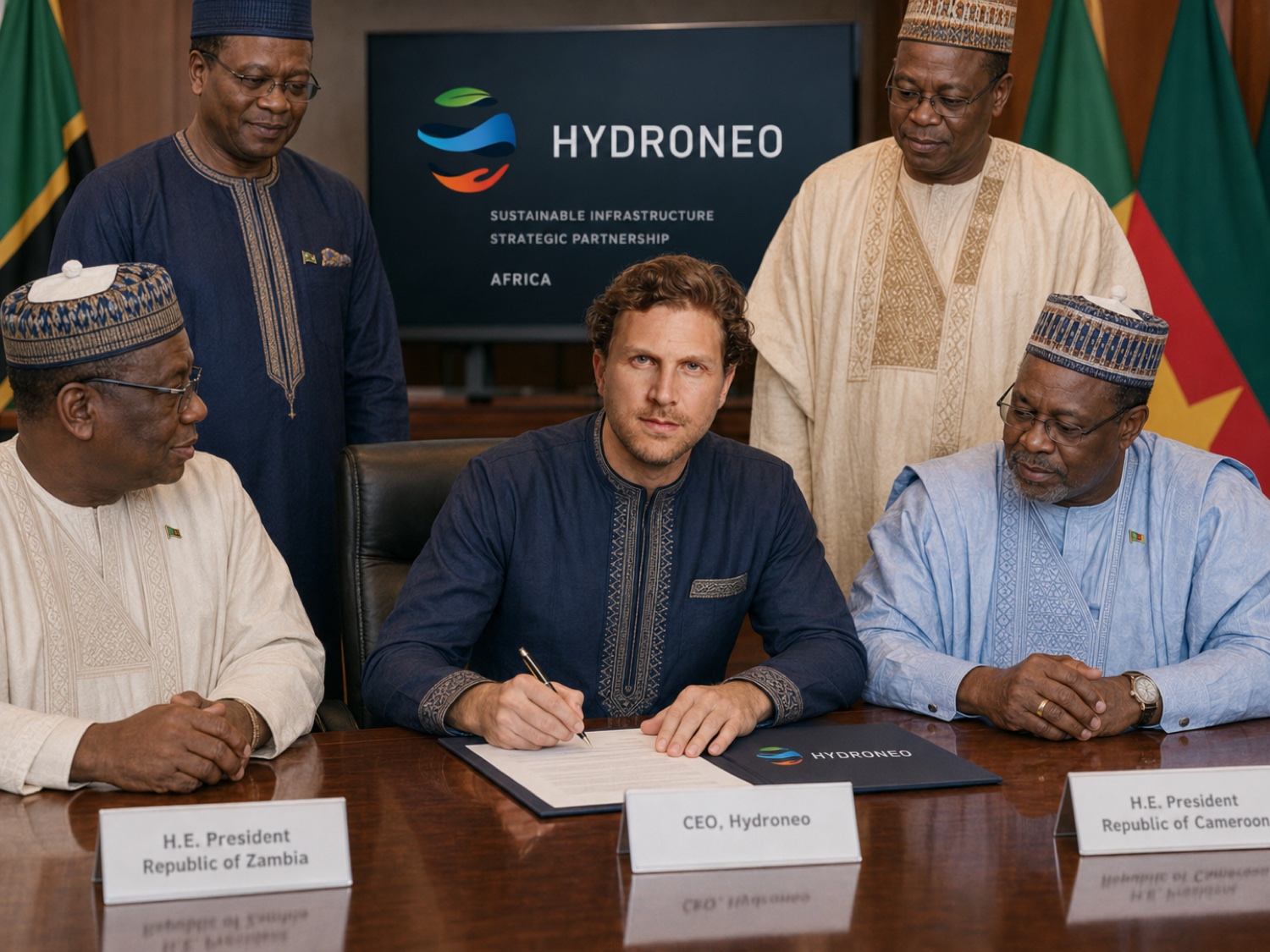
- A full-text scan surfaces zero person names, titles, or bios anywhere. The only proper nouns are project names, office cities, and the company. CEO Samuel Zekri is not named on his own site.
- The site claims "20+ years of industry experience" and a "team of French experts" for a company founded around 2014 with its first plant commissioned around 2023. An unattributed, unverifiable claim that reads as borrowed credibility.
- The real corporate structure is materially complex and entirely undisclosed: Hydroneo SAS (Paris, per the privacy policy), Hydroneo East Africa Ltd, and a separate 2015 fifty-fifty joint venture backed by AIIM, Mecamidi, and DFIs. Near-identical branding across separately owned balance sheets.
- The closest comparable, Serengeti Energy, publicly names its CEO plus 8 leaders and 9 board members with photos and bios. Hydroneo shows an anonymous wall to the same audience.
RecommendationAdd a leadership page with named executives, photos, titles, and track-record bios, plus a corporate-structure chart distinguishing the three entities and who owns what. Attribute the "20+ years" to specific named CVs, or drop the claim.
Critical
Mobile is broken and the navigation is decorative
- At 375px, the document is 980px wide, a 605px horizontal overflow, so a phone user gets a sideways-scrolling shrunken desktop with the hero clipped to "Green P" and the "About us" button truncated. No hamburger menu exists.
- This is disqualifying in a mobile-first market: Rwanda, Kenya, Burundi, and the utility, government, and job-candidate audiences who open the site on phones.
- The primary nav is a facade: "About Us," "Expertises," "Our projects," and "Contact" all point at hydroneo.com, and those four routes return HTTP 404. Only /job-offers and /blog are real pages.
- Eleven content-rich, individually optimized project pages are orphaned. The homepage links to none of them, so users cannot click through and Google gets no internal link equity. The most persuasive ESG content sits in Wix popups with no URL, so it is unlinkable and unindexable.
RecommendationRebuild the mobile layout to zero horizontal scroll at 375px with a hamburger nav, give each nav item its own indexable URL, wire every homepage project card to its project page, and promote the popup ESG content to real addressable pages.
High
Broken site chrome: an invisible menu, a vanishing nav, and 16 dead links
- The sticky header is a transparent bar with white nav text. At the top it sits over the dark hero and reads fine. Scroll down and the bar keeps the white text but has no background, so over the light content sections the titles Home, About Us, Expertises, Our projects, and Contact turn invisible while staying fully clickable. Visitors are left clicking labels they cannot see.
- There is a phantom "+" item at the end of the top menu, right after Contact. It is set to visibility:hidden but still reacts to the mouse, so hovering it pops an empty white box. It is a leftover empty submenu that should not be in the nav at all.
- Sixteen links are dead. The entire primary nav (Home, About Us, Expertises, Our projects, Contact) and the footer "Contact us" all point at the bare homepage instead of a real page, and "Learn more" and "Discover our social projects" have no destination at all (href is null).
- The white-on-transparent nav also fails the WCAG AA contrast minimum against the light sections it floats over, on top of the empty form labels and 4 images with no alt text found elsewhere on the page.
RecommendationGive the sticky header a solid background as soon as the user scrolls (the fix the redesign uses), delete the hidden "+" item and its empty submenu, and wire every navigation and CTA link to a real destination so nothing resolves to the homepage or to null.
High
Impact is asserted, never measured, which is backwards for DFI-backed capital
- The hero stat "100% Decarbonized" is a slogan, not a metric. The values copy leans on "ethical and eco-friendly," "minimal environmental impact," and "adhere to global standards," with no named framework, no figure, and no third-party verification.
- There is no quantified impact anywhere: no tonnes of CO2 avoided, no MWh generated, no people connected beyond the single Kavumu "30,000 Rwandans," no jobs, no community investment in dollars.
- Peers set the bar. Scatec headlines "7 million people powered annually," "24 million tonnes GHG emissions avoided," and "$22 million invested in local communities." Globeleq structures impact across education, health, and climate resilience.
- No standalone ESG framework or grievance mechanism is published, despite DFI funders contractually requiring ESG reporting and the company actively recruiting an "Environment and Social Expert."
RecommendationReplace "100% Decarbonized" with verifiable figures (tonnes of CO2 avoided per year, GWh, people connected, jobs, community dollars) mapped to the IFC Performance Standards, and publish a downloadable ESG report and a stakeholder-engagement page.
High
Literacy and copy errors on the highest-traffic surfaces
- The hero stat block reads "22 Project" (missing the plural). The footer reads "We developpe" (French leaking into English). The country list reads "TANZANI" (missing the final A).
- A hero-level heading reads "benefit local communities in multiple ways levels." The contact panel says "We will back to you soon." Garbled sentences sit in the primary CTA and value-prop zones.
- Dense undefined jargon stacks in single sentences ("from financial close to COD," "25-year concession and PPA with Rwanda's EUCL") with no glossary, excluding the recruit, community, and government audiences the site courts.
- These errors sit in the largest type on the page, the exact spots meant to convey scale and rigor to international lenders and lawyers.
RecommendationRun a full proofing pass by a native English editor ("22 Projects," "We develop," "benefit local communities on multiple levels," "We will get back to you soon," "TANZANIA"), expand each acronym on first use, add a one-line definition of "run-of-river," and lock copy behind review.
High
The design contradicts the environmental value proposition
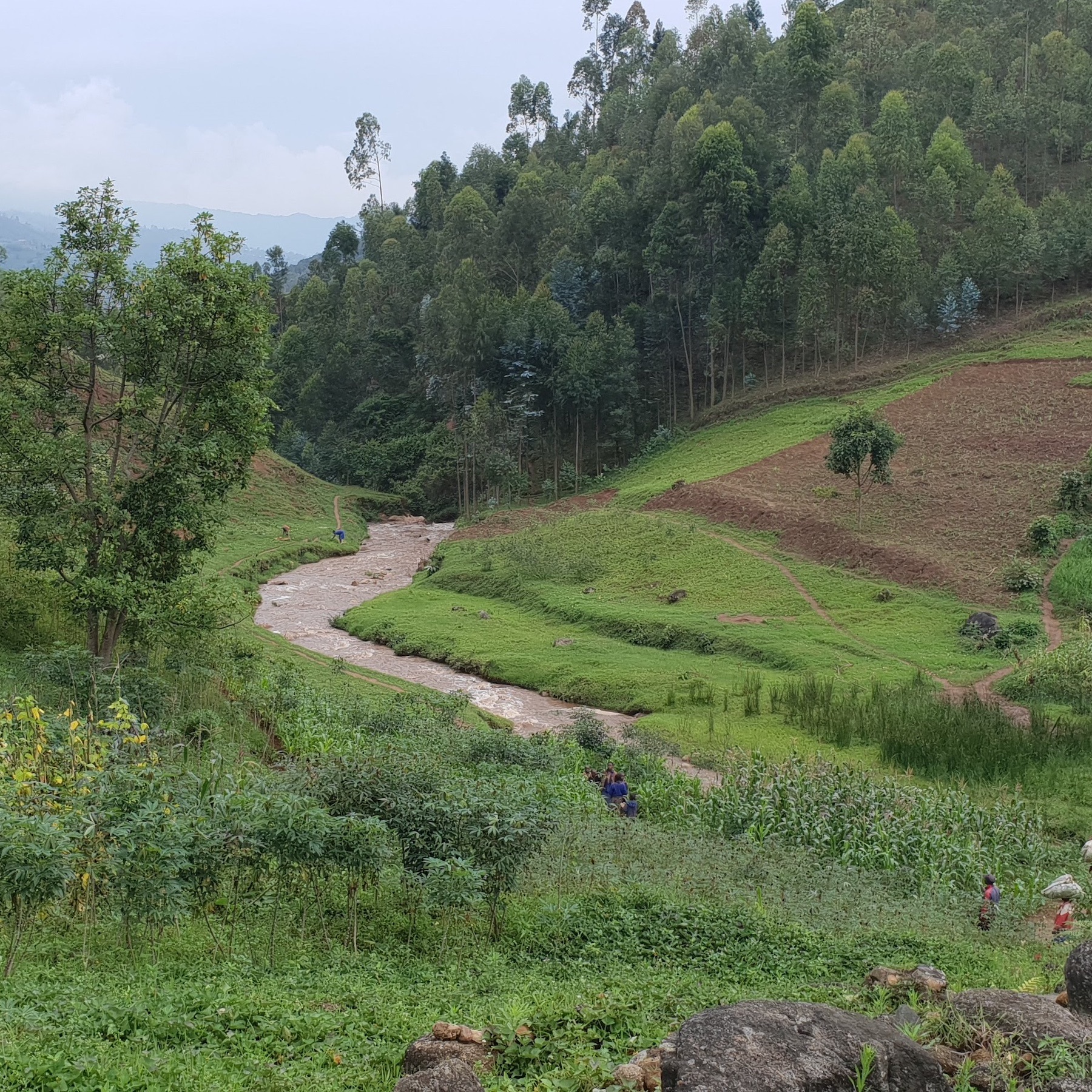
- The homepage hero background is an aerial photo of a large concrete gravity dam and spillway, the exact thing "run-of-river" means the company does not build. It directly undermines the "100% decarbonized, minimal impact" positioning to the environmentally-screening funders named on the site.
- Visual and document hierarchy are inverted: the real H1 ("WELCOME TO HYDRONEO") computes at 15px, while the line the eye reads as the headline ("Green Power for Africa") is a non-heading element at 64px. Bad for the eye and for screen readers and SEO.
- The white hero subheadline sits on light-grey concrete with no scrim, dropping the single most important sentence below comfortable contrast. The "About us" button is white on light green at a 2.02:1 ratio, failing the WCAG AA minimum of 4.5:1.
- Typography is undisciplined: headings in Madefor Display (the Wix default), the stat block in Montserrat, and the body falling back to bare Times serif. The Expertises tiles are a mismatched green, teal, and orange mosaic with mid-word breaks ("Engin/eering," "Constru/ction").
RecommendationReplace the hero with imagery of an actual run-of-river intake or a Hydroneo operating plant, promote a real value-prop line to a single properly styled H1, add a dark scrim under all hero text and darken the button to pass 4.5:1, and define one heading and one body typeface site-wide so nothing falls back to Times.
High
Losing to direct comparables on every credibility signal
- Serengeti Energy (same run-of-river model, same "up to 50 MW" mandate, overlapping countries) cleanly splits "10 operating plants, 80 MW operational" from "more than 300 MW under development," and names its full C-suite and board. Hydroneo does neither.
- Globeleq gives every plant a dedicated page with location, technology, capacity, and status, and splits "1,660 MW in operation" from "665 MW in construction." Hydroneo has detail pages for only 3 of 22 claimed projects.
- Active newsrooms are the norm. Globeleq shows articles dated through 2026, Serengeti runs press releases and impact stories. Hydroneo's blog is frozen at three posts dated June 2, 2021, one of them duplicated, with no news section in the nav.
- Peers convert partner relationships into evidence, tying named financiers to dated project closings. Hydroneo leaves its blue-chip advisors and DFI funders as an unverifiable flat logo wall, with no interactive map to substantiate the "9 countries" claim.
RecommendationRestructure to the IPP standard: add a leadership section, a sustainability section with metrics, a dated news section, and a partners area. Build per-project pages for all 22 with partners and funders attached, add a status-colored Africa map, and move "Job Offers" below these audience-critical sections.
Medium
Platform bloat, thin security headers, and a data-capture bug
- The page ships 1.86 MB over 176 requests, with 1.1 MB of JavaScript across 110 files (60% of page weight) to render a single scroll page. One Wix runtime file alone is 1,023 KB, inflating load time on the mid-range phones common in the target markets.
- Security headers are thin: only a bare HSTS and X-Content-Type-Options. No Content-Security-Policy, X-Frame-Options, Referrer-Policy, or Permissions-Policy, the exact items a DFI or corporate InfoSec review flags.
- With no X-Frame-Options or frame-ancestors rule, any domain can embed the site in an iframe, which enables clickjacking. On the credit side, a scan of the page source found no hardcoded API keys, tokens, or credentials. Because the site runs on Wix the backend and its secrets are platform-managed, so the real exposure is configuration and client hygiene, not leaked keys. The Wix warmup data does expose internal app and instance IDs in the page source, a minor information-disclosure item worth noting.
- The contact form's message field has the name attribute set to a single space, so the most important field submits under a whitespace key and can be silently dropped or mislabeled on every inquiry.
- The form collects name, email, firm, and phone with no consent notice at the point of collection, for a Paris-domiciled entity. Every input has an empty aria-label, so screen-reader users cannot tell the fields apart.
RecommendationFix the message field's name attribute and confirm submissions capture the message body, add a consent line linking the privacy policy plus aria-labels on all fields, and set the security headers the platform allows. Given the site is only about six pages, a static rebuild would remove the runtime bloat and unlock full control.